Bakery & Baked Products
Formulation, structure, texture and adaptation to baking processes
Bread depends on dough rheology, fermentation and gas retention; cakes and muffins on batter aeration and starch–protein setting; biscuits and crackers on fat, sugar, solids, moisture and the baking profile.
We develop and reformulate with ingredients, mixing and manufacturing conditions considered together, according to the particular system and product.
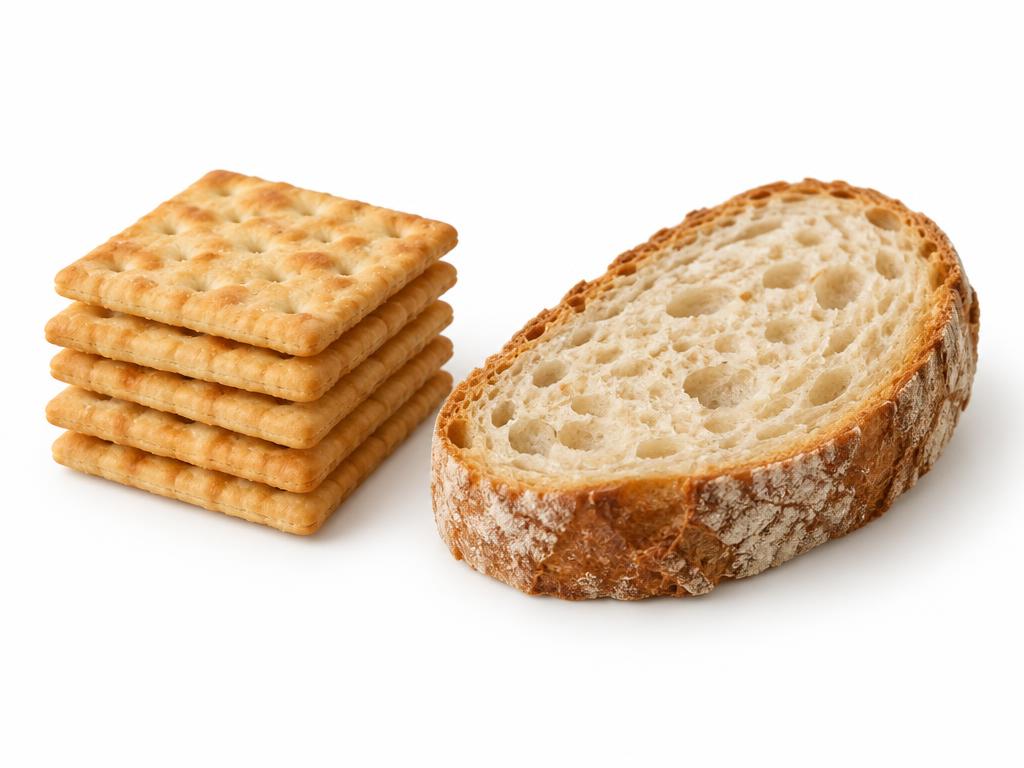
Product families
Fermented doughs, batters and low-moisture systems call for different balances and processes.
- 01
Breads, buns & fermented doughs
Flour and functional proteins, including gluten where applicable, hydration, yeast and proofing. Crumb structure, volume and softness.
- 02
Cakes, sponge & muffins
Batter viscosity, whipping, emulsification and gas incorporation. Egg functionality, starch setting, volume and soft crumb.
- 03
Cookies & sweet biscuits
Fat and sugar balance, spread during baking, crisp or soft texture, water content and browning.
- 04
Crackers & savoury baked snacks
Dough sheeting and forming, expansion, low water activity, crispness and baking profile.
- 05
Laminated & filled pastries
Sweet and savoury laminated or short pastries. Dough–fat layers, filling moisture and freezing where relevant.
- 06
Gluten-free baked products
Alternative starch, flour, hydrocolloid and protein systems for structure and sensory texture, without assuming gluten belongs in the product.
- 07
Plant-based & reformulated bakery
Egg substitutes and foam, sugar and fat reduction, protein or fiber enrichment. Effects on structure, moisture and texture.
- 08
Premixes, frozen dough & par-baked products
Uniform powder blends, cold-chain processing, frozen dough functionality, partial baking and production repeatability.
Technical challenges
What do we investigate when dough, texture or baking behavior is not as expected?
Dense bread, low volume or collapse?
Review flour-protein variability, hydration, dough development, proofing, gas retention and oven parameters.
Does a cake sink, crack or lack aeration?
Check batter viscosity, whipping, emulsification, leavening and when the structure sets relative to the baking profile.
Does the product dry or harden rapidly?
Distinguish starch retrogradation, moisture migration and staling from microbial deterioration. Review water, fat and packaging; safety needs separate assessment.
Do biscuits or crackers lose crispness or become too hard?
Review water, fat and solids alongside mixing, sheeting, baking and packaging.
Does egg or gluten substitution fail?
Map protein, foaming and emulsion functions, then balance starches, hydrocolloids and rheology. There is no universal replacement across systems.
Does dough stick or tear in machinery?
Check hydration, rheology, mixing, temperature, rollers and raw-material or batch variability.
Does sugar or fat reduction, or protein enrichment, change structure?
Consider bulk, browning, water binding, the dough network, leavening and texture, not just the ingredient composition.
Does the lab recipe fail in production or after freezing?
Review batch mixing energy, heat transfer, dough handling, process scaling and the cold chain.
Processes & technologies
Work is adapted to the dough or batter. Fermentation, lamination and whipping apply to different products, not every baked system.
- 01
Ingredients & hydration
Ingredient functionality and flour, starch and protein systems; water balance for the intended structure.
- 02
Mixing, kneading & whipping
Dough and batter rheology, structure development and air incorporation suited to the system.
- 03
Yeast, fermentation & proofing
Time, temperature and yeast activity in fermented products, with attention to gas retention.
- 04
Sheeting, lamination & forming
Depositing, filling and dough handling; matching structure and temperature to the equipment conditions.
- 05
Baking & cooling
Oven profile, structure setting, moisture control, water loss and product cooling.
- 06
Freezing, packaging & scale-up
Par-baking, storage and scale-up trials appropriate to the product and cold chain.
From lab to production
Industrial mixers, ovens and fermentation or proofing equipment change shear, heat transfer, moisture loss and final volume and texture. We review formulation and process together under actual site conditions.
Work includes prototypes, trial planning and support, and pilot transfer with manufacturing partners as the project requires. Shelf life and safety need validation for the actual product, packaging and storage conditions.
Developing a baked product or solving an industrial baking problem?
Tell us about the product, manufacturing conditions and the challenge in the dough, batter or final texture.
Contact us