What Does a Food Engineer Do? More Than Just a Recipe
A good recipe is only the starting point. Learn what a food engineer does and how food engineering helps turn ideas into products ready for industrial production.
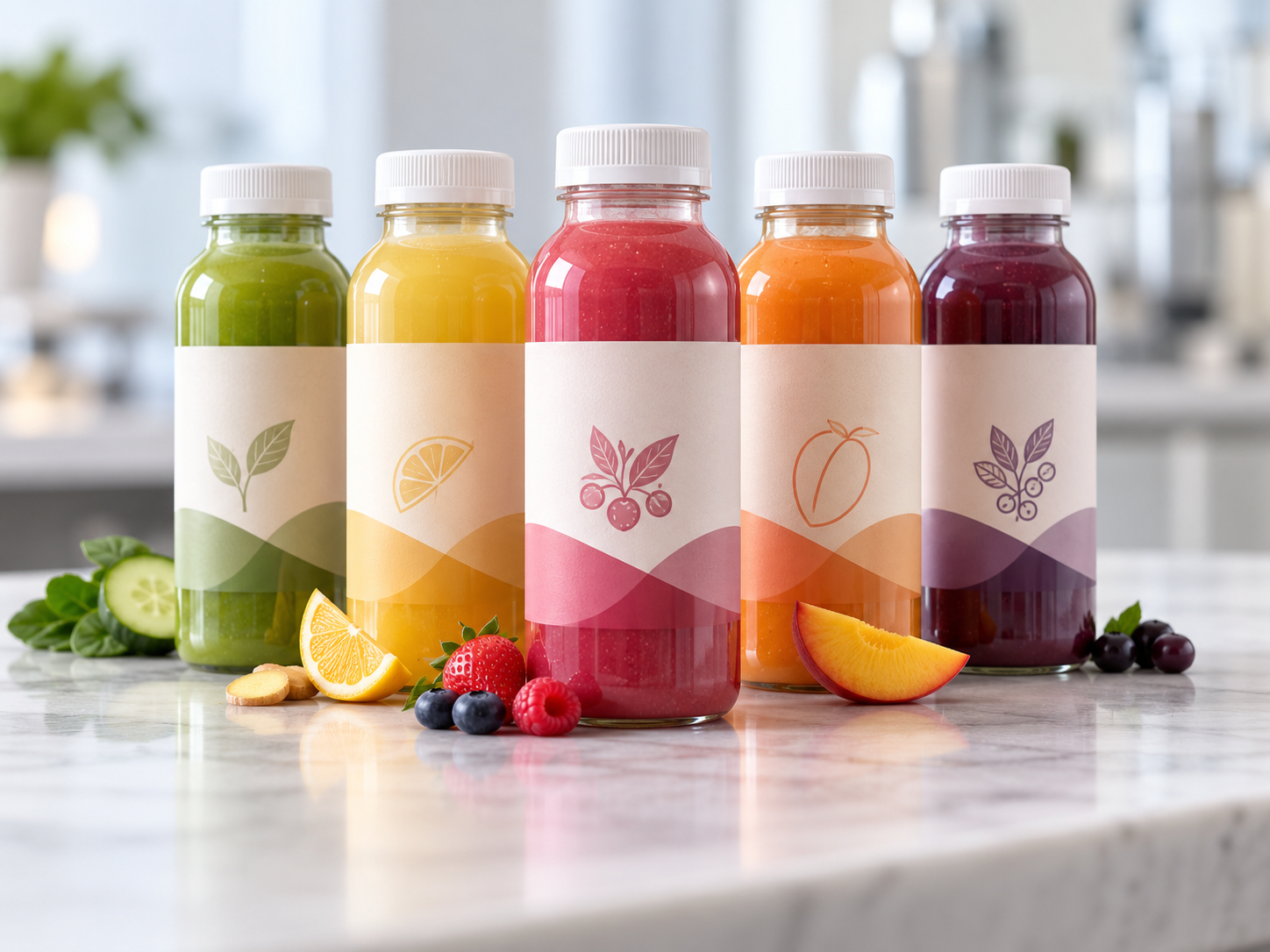
Imagine you've developed a new beverage. After several trials, you've achieved exactly the flavor you wanted. The texture is right, the product looks good, and everyone who has tasted it likes the result.
Now you want to take the next step: manufacture it at a factory and bring it to market.
But suddenly, new questions arise.
Will the product maintain its flavor and texture after several weeks? Can it be manufactured consistently at a larger scale? Does it need refrigeration? What happens if the ingredients separate during storage? How do you determine whether the product is safe and how long it can remain on the shelf?
These are some of the questions a food engineer helps answer.
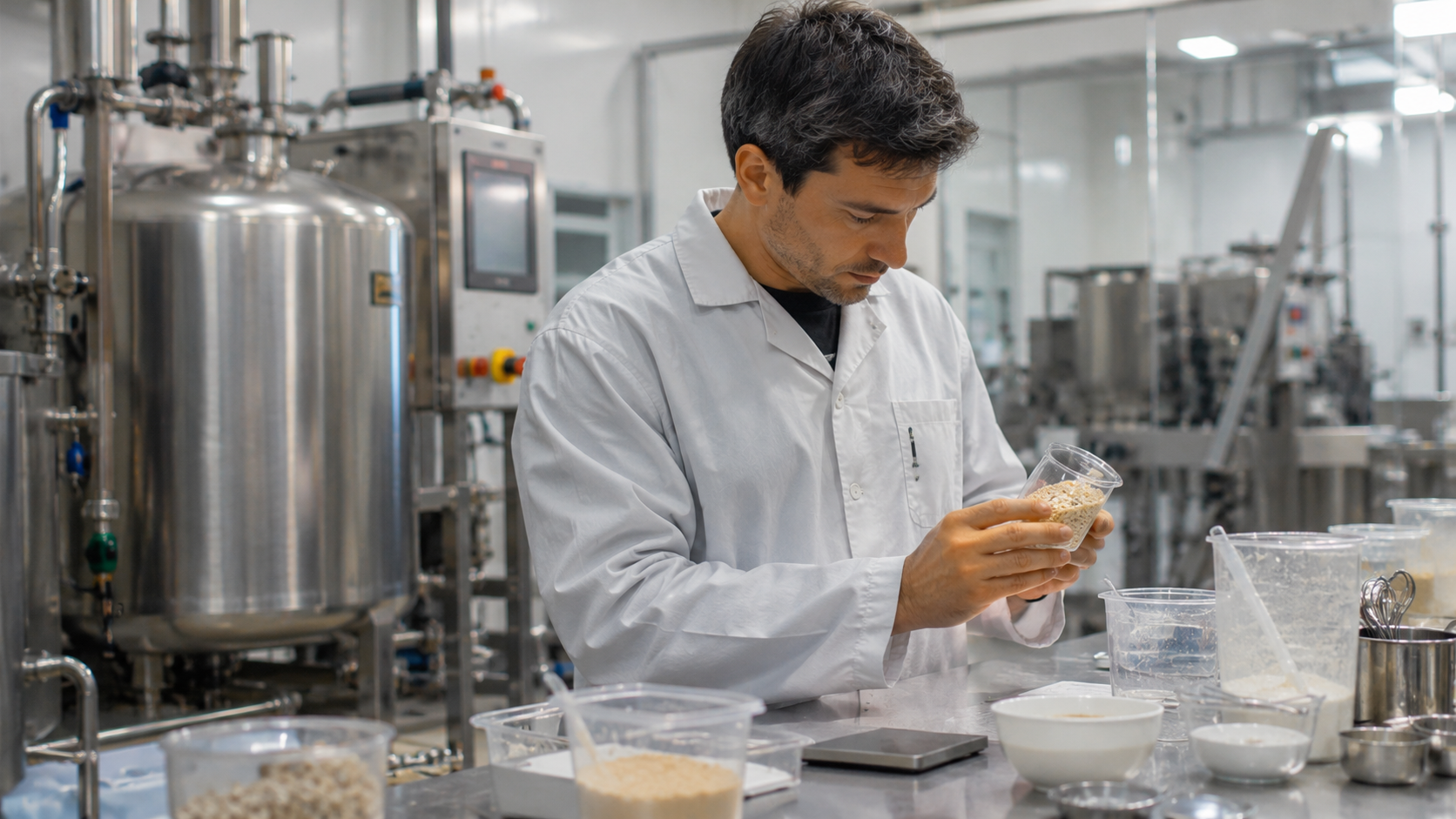
What Does a Food Engineer Actually Do?
A food engineer applies knowledge of chemistry, microbiology, physics, engineering, and food technology to develop, improve, and manufacture food products.
The role goes far beyond creating recipes.
A food engineer needs to understand how ingredients interact, how they behave during processing, and how production conditions affect the final product.
In practical terms, food engineering helps transform a formulation that works in a laboratory or kitchen into a product that can be manufactured under controlled conditions, with consistent quality and appropriate food safety measures.
The work can involve developing new products, improving existing formulations, solving texture and stability problems, evaluating raw materials, optimizing processing conditions, and supporting the transition from laboratory trials to industrial production.
Why a Recipe That Works in the Kitchen May Not Work in a Factory
One of the biggest differences between preparing food and developing a commercial food product is the manufacturing process.
In a kitchen, adjustments can often be made along the way. If a sauce is too thick, you can add some water. If the texture is not quite right, you can mix it longer or change the cooking temperature.
Industrial production works differently.
Factories operate with specific equipment, larger volumes, defined processing times, heating and cooling systems, and parameters that must remain within controlled limits.
Consider a few examples.
A sauce that has the perfect consistency in a small pot may change its texture when it passes through an industrial pump or heat exchanger.
A protein beverage that looks completely homogeneous immediately after preparation may develop sediment or separate into layers during storage.
A cream with an excellent texture in the laboratory may lose stability after the heat treatment required for commercial production.
These problems are not always solved by adding another ingredient or increasing the mixing time.
The solution often requires understanding the product and the manufacturing process as one interconnected system.
That is a central part of food engineering.
What Happens During Food Product Development?
Successful product development begins long before a production line starts running.
The first step is defining what the product needs to achieve.
It is not enough to say that you want a healthy beverage, a delicious snack, or a high-quality sauce.
The development brief should consider specific requirements such as flavor, texture, nutritional composition, ingredients, packaging, storage conditions, expected shelf life, target cost, and manufacturing constraints.
Once these requirements are established, formulation development can begin.
Raw materials are selected, their interactions are evaluated, and laboratory trials are carried out to achieve the desired product characteristics.
But even after a promising formulation has been developed, several important questions remain.
Product Stability and Shelf Life
A food product must maintain acceptable quality throughout its intended shelf life.
Depending on the product, this may involve evaluating changes in texture, ingredient separation, oxidation, color changes, flavor deterioration, or microbial growth.
For example, a beverage may taste excellent on the day it is produced but develop sediment or an undesirable flavor after several weeks.
A sauce may become thinner, thicker, or less homogeneous during storage.
Shelf life cannot be established simply because a product still looks acceptable after a few days.
It must be supported by appropriate testing and evaluation, taking into account the food, its manufacturing process, packaging, and intended storage conditions.
Food Safety
A commercially manufactured food product must be produced using processes and controls appropriate to its safety risks.
These risks may be microbiological, chemical, or physical.
Food engineers can contribute to identifying potential hazards, selecting suitable processing conditions, and defining the technical parameters that need to be controlled.
Depending on the project, this work is carried out together with specialists in food microbiology, quality assurance, and regulatory compliance.
The objective is not only to create a product that tastes good, but also to establish a manufacturing process suitable for its intended use and market.
Designing for Industrial Production
Producing a successful laboratory sample is an important milestone, but it does not mean the development process is complete.
The next challenge is determining how the product will be manufactured at a larger scale.
Which equipment will be used? How will the ingredients be added? What temperatures and processing times are required? Will the product need homogenization, pasteurization, or another treatment?
Parameters such as mixing speed, pressure, temperature, processing time, and the order in which ingredients are introduced can significantly affect the final result.
The challenge is to reproduce the characteristics of the approved product while adapting the formulation and process to the actual capabilities of the manufacturing line.
This often requires pilot trials, process adjustments, and evaluation of the resulting product before moving into commercial production.
Why Involve a Food Engineer Early in the Project?
Many businesses seek technical assistance only after a problem appears.
Perhaps the product separates during storage, the texture is inconsistent, the shelf life is insufficient, or the factory cannot reproduce the original laboratory sample.
However, some of these difficulties can be identified much earlier.
Imagine developing a beverage intended to remain stable at room temperature for several months.
That requirement influences the choice of ingredients, formulation, preservation process, packaging, and testing strategy from the very beginning.
It makes little sense to spend months perfecting a recipe only to discover that it cannot withstand the processing conditions necessary for commercial distribution.
Involving food engineering expertise early helps align product development with the realities of manufacturing.
It can reduce unnecessary trials, identify technical limitations, and avoid costly changes later in the project.
It also helps evaluate industrial and economic feasibility, which is just as important as achieving the desired flavor or texture.
When Does a Food Business Need a Food Engineer?
You do not need to be building a new factory or developing groundbreaking technology to benefit from food engineering.
A food engineer may be valuable when a business wants to:
Develop a new food or beverage product.
Improve the flavor, texture, or stability of an existing product.
Replace ingredients or adjust nutritional composition.
Investigate manufacturing inconsistencies.
Adapt a formulation to different equipment or a new production facility.
Reduce production costs while protecting critical product characteristics.
Prepare for pilot trials or industrial scale-up.
For entrepreneurs and startups, technical guidance can help define a realistic route from an initial idea to a manufacturable product.
For established food companies, the focus may be on improving existing processes, resolving quality issues, evaluating alternative ingredients, or developing new product lines.
The scope of work depends on the product and the challenge.
What matters is identifying the technical questions that need to be answered before investing time and resources in the wrong solution.
From a Good Idea to a Product Ready for Manufacturing
Behind every food product on a supermarket shelf are many decisions that consumers never see.
Why does it have a particular texture? How is its flavor maintained? Why was a specific package selected? Which manufacturing process makes the product possible? How can the company achieve consistent results from one production batch to another?
Consumers do not need to know every technical decision behind a product.
They simply expect it to taste good, remain safe under the intended conditions, and deliver a consistent experience whenever they buy it.
Achieving that result requires more than a good recipe.
It requires understanding ingredients, processing, stability, food safety, and manufacturing as parts of the same development process.
A strong product idea is an excellent starting point. Food engineering helps turn that idea into something that can be produced, preserved, and brought to market with confidence.