Fruit & Vegetable Products, Jams & Preserves
Formulation, texture and stability in fruit, vegetable and preserved products
A high-solids jam, a fruit preparation for yoghurt, a bake-stable filling, a vegetable purée and acidified pickles are different systems: they differ in soluble solids, acidity, gel structure, particulates and preservation strategy.
We develop and improve products by considering seasonal raw materials, composition, cooking, filling and packaging together — treating the natural variability of fruit and vegetables as part of development.
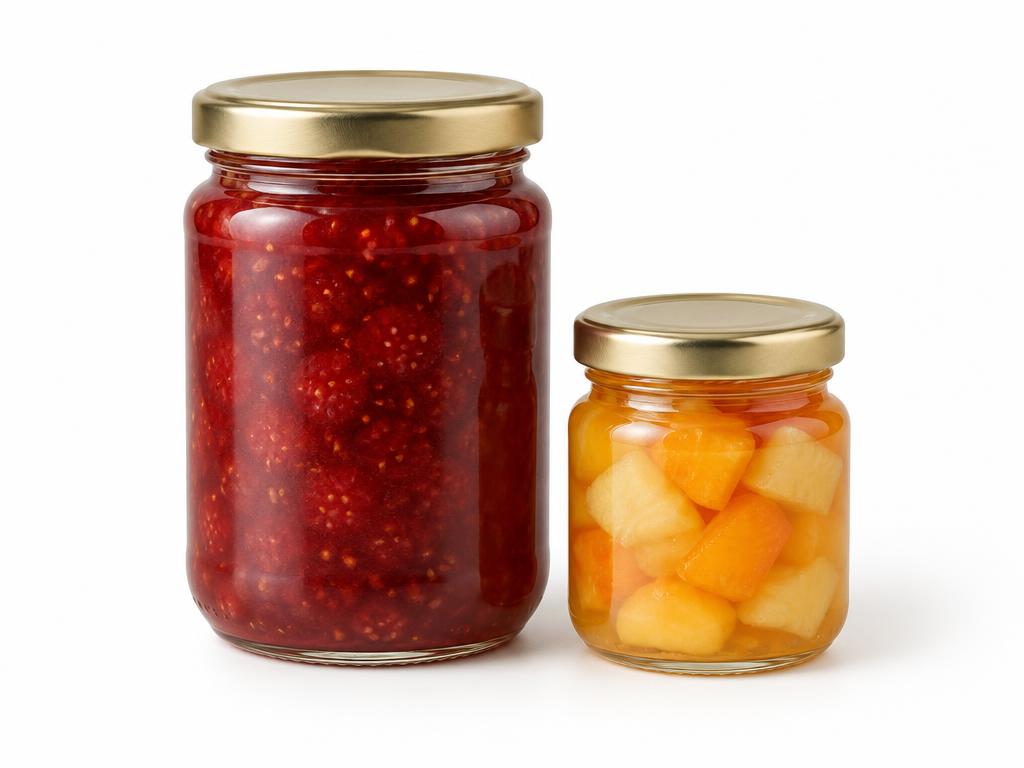
Product families
Acidity, soluble solids, water activity and storage conditions together determine structure and preservation; no single process fits every fruit and vegetable product.
- 01
Jams & fruit spreads
Classic jams, high-fruit and reduced-sugar spreads. Soluble solids (Brix), acidity, pectin and gel system, colour, flavour and spreadable texture.
- 02
Fruit preparations for dairy & desserts
Preparations for yoghurt, ice cream and desserts. Fruit-piece integrity, viscosity, matching acidity and solids to the host product, and limiting colour and water migration.
- 03
Bake-stable fruit fillings
Fillings for pastries, cakes and biscuits. Heat stability, preventing boil-out and run-off in the oven, water-activity control and fit with dough and depositing.
- 04
Fruit purées
Purées and pulps for industrial or consumer use. Particle size, viscosity, enzymatic browning, colour and heat treatment matched to the fruit's natural acidity.
- 05
Vegetable preparations & purées
Vegetable purées, creams and bases. Many vegetables are low-acid and need a different preservation strategy from fruit; texture, colour, water release and process validation.
- 06
Pickles & pickled vegetables
Brined, vinegar-based and fermented vegetables. Salt, equilibrium pH, crunch, colour and controlled fermentation, distinguishing direct acidification from fermentation.
- 07
Preserved fruit & vegetables
Fruit in syrup, vegetables in jars and cans. Balancing solids and covering liquid, piece integrity, heat penetration and pack; a validated preservation process for each product.
- 08
Reduced-sugar & reformulated fruit products
No-added-sugar, reduced-sugar and high-fruit products. Lowering sugar changes gel, water activity, flavour and stability; nutrition and marketing claims are assessed separately.
Technical challenges
We review raw materials, composition, cooking, filling and storage together to find the source of a problem before changing the recipe.
Jam won't set, or is too runny or too firm?
Check pectin type and dose, soluble solids, acidity, calcium, cooking time and cooling rate to understand why the gel system isn't forming as intended.
Product weeps liquid after filling or storage?
Assess syneresis, gel stability, shear and cutting in processing, fill temperature and storage conditions, and distinguish these from microbiological issues.
Filling runs or boils out in the oven?
Check a bake-suitable thickening system, solids and water activity, the starch–hydrocolloid balance, and the amount and placement of filling in the dough.
Colour browns or fades?
Distinguish enzymatic browning, heat-driven reactions, oxidation and light-induced pigment loss, then review raw materials, acidity, heat treatment and packaging.
Sugar reduction hurts texture and flavour?
Assess sugar's role in gel, water activity, perceived acidity and body, and select a suitable pectin and structuring system; no single replacer covers every function.
Fruit pieces break down or sink?
Review ripeness and variety, pre-treatment, mixing and pumping, base viscosity and density differences to keep pieces intact and evenly distributed.
Pickles lose crunch or change colour?
Assess variety and maturity, salt and acidity, calcium, temperature and the fermentation or acidification process, along with storage and packaging.
Product changes with season, variety or supplier?
Map raw-material variability in solids, acidity, texture and colour, and define specifications and adjustment rules for production rather than one fixed recipe.
Processes & technologies
Selection depends on acidity, solids, particulates and pack. Acidic, acidified and low-acid products need different preservation strategies.
- 01
Raw materials & pre-treatment
Fruit and vegetable specifications, washing, cutting, blanching, freezing or other pre-treatment, and review of seasonal variability.
- 02
Cooking, concentration & solids
Open or vacuum cooking, concentration and control of soluble solids while protecting colour, aroma and pieces.
- 03
Gel & thickening systems
Pectins, starches and hydrocolloids, acidity and calcium, adapting structure to the use: spread, preparation or filling.
- 04
Acidification, brining & fermentation
Brines, vinegar and controlled fermentation for pickles; distinguishing naturally acidic from acidified products.
- 05
Filling & heat treatment
Hot fill, pasteurisation or sterilisation according to the product, only after professional validation matched to the recipe and pack.
- 06
Packaging, storage & scale-up
Jars, cans, pouches and industrial packs; planning pilot trials and comparing results with line conditions.
From lab to production
Industrial kettle cooking, vacuum concentration, pumping and filling change gel structure, piece integrity and colour. We review recipe, raw materials, equipment and process parameters together and prepare trials with manufacturing partners.
Microbiological safety, the preservation process, packaging and shelf life require product-specific validation, with appropriately qualified specialists when needed.
Developing a jam, fruit preparation, purée or preserve, or solving a stability or production problem?
Tell us briefly about the product and your texture, colour, preservation or processing challenge.
Contact us