Meat, Fish & Alternatives
Formulation, texture and structure in meat, fish and plant-based alternatives
An emulsified sausage, a coated nugget, a processed fish product and a plant-based whole-cut are different systems: they differ in protein source, water and fat binding, gel formation and in how structure is built — by comminution, forming, cooking or texturisation.
We develop and improve products by looking at raw materials, formulation, equipment and manufacturing conditions together, treating the cold chain and food safety as requirements to be validated for each product.
Product families
Muscle protein, fish protein and plant proteins behave differently under heat, salt and shear, so each family needs its own approach to structure, texture and preservation.
- 01
Sausages and meat emulsions
Frankfurters and emulsified products. Salt-soluble protein extraction, fat emulsion stability, chopping temperature, casings, cooking and smoking.
- 02
Cold cuts and deli products
Sliced, cooked or smoked products. Water binding, yield, clean slicing, colour and stability through slicing and packing, within the salt levels and additives permitted.
- 03
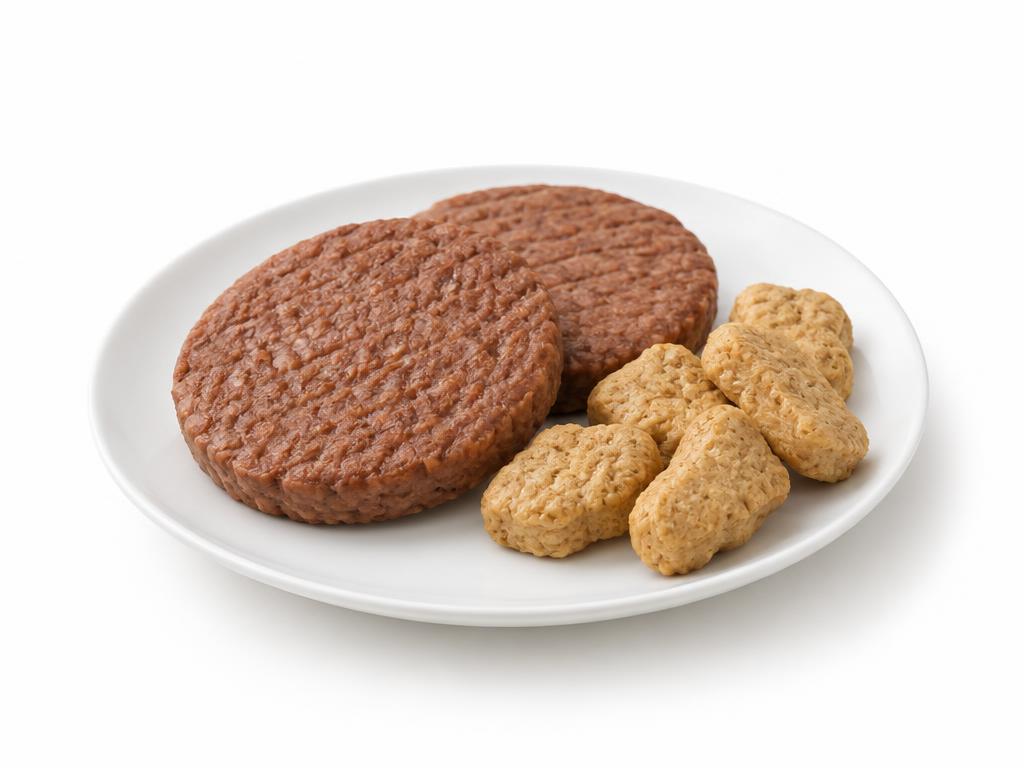
Restructured, formed products and nuggets
Burgers, patties, nuggets and formed products. Particle binding, forming, batter and breading, par-frying or baking, and freeze–thaw behaviour.
- 04
Processed fish and seafood products
Products based on fish mince, surimi and seafood. Heat- and oxidation-sensitive proteins, gelation, texture, odour and flavour, and a tight cold chain.
- 05
Plant-based minced meat alternatives
Burger, sausage and meatball alternatives. Textured and functional proteins, binders, structured fat systems, juiciness, colour change on cooking and off-notes.
- 06
Plant-based fish and seafood alternatives
Tuna, salmon and seafood alternatives. Flaky or layered structure, tender bite, colour and marine aroma, and lipid choices — without implying nutritional equivalence.
- 07
Whole-cut and unagi alternatives
Whole-muscle style pieces and unagi alternatives. Fibre orientation, bite, layering, marinade and glaze uptake, searing, and structure retention on slicing and reheating.
- 08
Textured protein-based products
Dry textured proteins, high-moisture extruded systems and structured gels. Hydration, fibre formation, the protein–fibre–water balance and fit to the final application.
Technical challenges
We look at protein source, formulation, equipment and process conditions together to find the cause before adding a binder or changing the recipe.
Does the sausage release fat or water when cooked?
We review protein extraction, salt level, the protein–fat–water ratio, chopping temperature and cooking rate to understand why the emulsion breaks.
Is yield low, or does the product purge liquid in the pack?
We assess water binding, pH, phosphate systems or alternatives, injection and tumbling, and the cook–chill profile, and separate this from microbial spoilage.
Does the product crumble, crack or lose its shape?
We check particle binding, grind size, forming temperature, binder and gel systems, and the effect of freezing and thawing on structure.
Does the coating fall off or absorb too much oil?
We look at the product surface, predust, batter and breading layers, viscosity, par-fry temperature and fit with the consumer's oven or air-fryer preparation.
Is the meat alternative dry, spongy or lacking bite?
We examine textured protein hydration, particle size, the fat and water system, binders and fibre formation to improve juiciness and bite rather than simply adding fat.
Does the plant protein bring off-flavours or unwanted colour?
We distinguish notes from the raw material, lipid oxidation or processing, and review protein selection, flavour cleanup, masking and cook-stable colour.
Does the whole-cut fail to show real fibres or layers?
We review protein and fibre composition, moisture, energy input and cooling during structuring, and forming or layering methods — recognising that each machine builds structure differently.
Does texture or colour drift over shelf life?
We assess lipid and pigment oxidation, purge, modified-atmosphere packaging, freezing and storage temperatures; shelf life is validated for each product.
Processes & technologies
The process is chosen based on the product type and protein source; not every step applies to every product.
- 01
Raw materials and proteins
Meat, fish, plant and textured proteins, fats, fibres and binders; functionality, batch variability and effect on structure and flavour.
- 02
Grinding, chopping and emulsions
Particle size, salt-driven protein extraction, fat emulsions and temperature control during mechanical processing.
- 03
Injection, marination and tumbling
Brines, marinades and tumbling for water binding and yield, matched to product type and regulatory requirements.
- 04
Texturisation, forming and coating
Textured protein hydration, fibre and layer formation, forming, batter and breading according to the available process and equipment.
- 05
Cooking, smoking, frying and chilling
Cooking, smoking, par-frying or baking and chilling profiles; thermal treatment is professionally validated for each product and line.
- 06
Packaging, freezing and production transfer
Vacuum or modified-atmosphere packaging, freezing and the cold chain; pilot trial planning and comparison with line conditions.
From lab to production
Industrial bowl choppers, formers, coating lines, ovens and freezers change protein extraction, processing temperature, binding and final texture. We review formulation, raw materials, equipment and process parameters together and prepare trials with manufacturing partners.
Microbial safety, thermal treatment, labelling, packaging and shelf life require product-specific validation, with qualified professionals where needed.
Developing a meat, fish or alternative product, or solving a texture, yield or production problem?
Tell us briefly about the product and your structure, flavour, preservation or processing challenge.
Contact us